Slugs in June: 5 Methods That Really Work — and 3 Myths
Half your lettuce gone overnight? We separate what actually works from what is just internet folklore — and show you the best combination for the next two weeks.
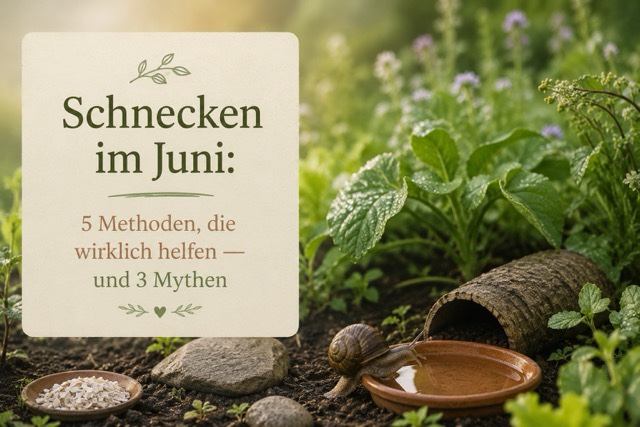
Slugs are at their hungriest in June — moist soil, warm nights, fresh greens everywhere. Before you buy expensive products: these five methods really work. And yes, three of the best-known home remedies are pure myth.
1. Evening collection right after the first rain
Sounds unspectacular, but it’s the most effective method in the world. A flashlight, a bucket with some soapy water, one round through the beds — 80 percent of the population is gone after three consecutive evenings. Better three intense evenings than two weeks of half-effort. Tip: invite the neighbors, do it together — then it becomes a garden evening instead of a chore.
2. Sheep wool pellets around vulnerable plants
Works two ways: rough to crawl over, and it pulls water out of the slime. Important: a thick ring, at least a finger-deep layer, and renew after every rain. Tests from Switzerland show sheep wool is significantly more effective than sawdust or ash. Bonus: it breaks down after 6 to 8 weeks and quietly feeds the soil.
3. Beer traps — only if you place them 50 meters away from your beds
Beer pulls slugs from up to 20 meters around. Put a trap in the bed and you lure your neighbor’s slugs to your lettuce — some drown, many feast first. Beer traps only work as bait at the garden edge, far from what you want to protect.
Im Lexikon: Kopfsalat
4. Keep the ground dry where you can
Water in the morning, never at night, and always point-precise at the plant, not across the surface. Dry paths between beds are the most important slug brake of all — they want to travel slime-efficiently. If you mulch, use coarse material (straw, hedge cuttings), not fine bark mulch that traps moisture.
5. Protect young plants under fleece or a halved PET bottle
The first two weeks after planting out are the most critical — after that, plants are usually big enough that a single slug only eats one level in an evening, not everything. A halved PET bottle over a young lettuce is ugly, but effective: doubles as slug protection and mini greenhouse.
Im Lexikon: Salat-Mix-Musterbeet
The 3 myths you can skip
Salt on slugs: kills them, yes — but salt sinks into your soil. Used regularly, you ruin the soil for years. Please don’t.
Copper tape around raised beds: works in theory (chemical reaction with slime), in practice corrodes within weeks and becomes useless. Forget it.
Eggshells as a barrier: looks great on Pinterest, doesn’t deter slugs at all — they crawl right over. Valuable lime for the soil yes, slug protection no.
Realistic expectation: you will never be slug-free. The goal isn’t zero, it’s balance — enough hedgehogs, ground beetles, and Indian runner ducks in the garden to keep the population in check. Plant slug-attractor crops in one corner (e.g. marigolds), and they’ll go there first. That bed is the bait — the rest stays safe.
Im Lexikon: Tagetes / Studentenblume