Mulching in June: How a Layer of Mulch Carries Your Beds Through Summer
Once the heat arrives, bare beds dry out fast. A layer of mulch saves you litres of watering all summer long — and a lot of work.
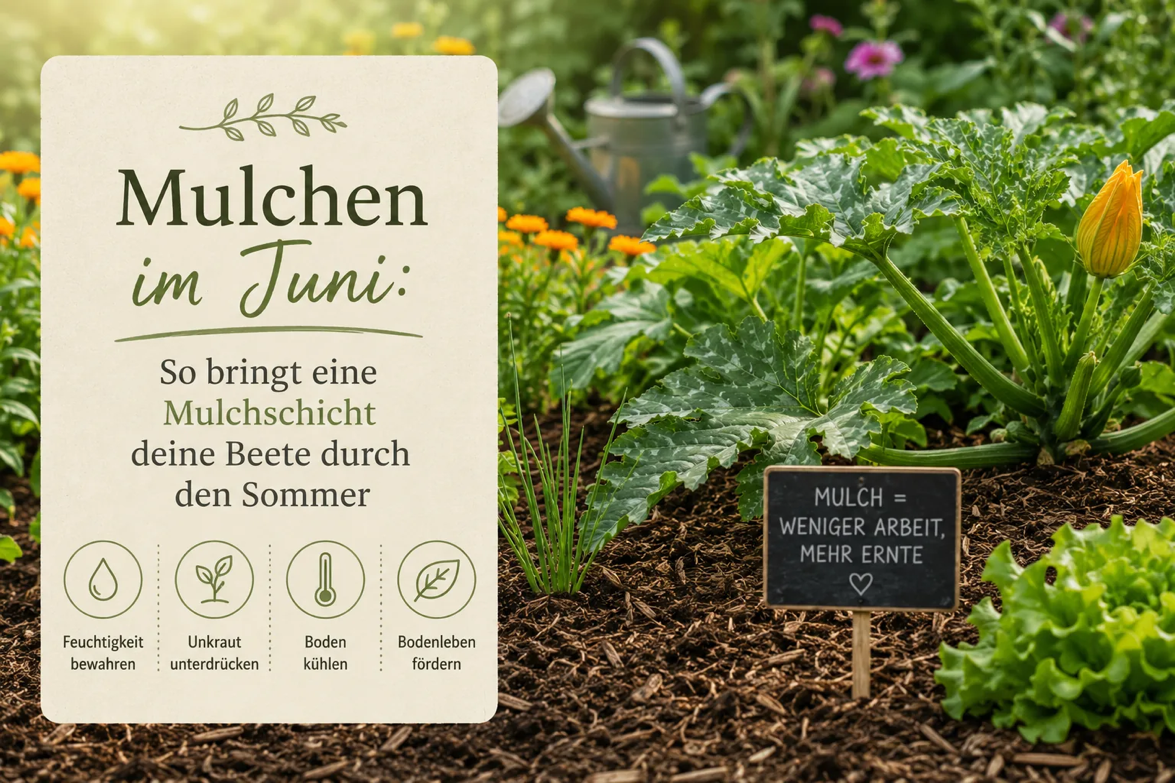
In June the sun sits high, the soil is warm, and on hot days your watering can evaporate almost faster than you refill it. This is exactly when mulching pays off most. A thin layer of organic material lies over the soil like a blanket — and takes a big chunk of summer work off your hands.
Why bare beds dry out so fast in summer
Bare soil is an evaporation engine in high summer. Sun and wind pull moisture from the top few centimetres, the surface crusts over, and your next watering partly runs off instead of soaking in.
It’s especially noticeable in a raised bed: the limited volume heats up faster than open garden soil. Without something to counter it, you’ll be watering daily in July and August — and still lose yield, because the roots are sitting in drought stress.
What a layer of mulch does for you
Mulch is simply a protective blanket of organic material on the soil surface. It slows evaporation noticeably, keeps the soil beneath cooler and more evenly moist, and stops it from crusting.
There’s a second effect too: weeds barely germinate in the dark under the layer, and as the material slowly breaks down it feeds the soil life. You water less, weed less, and improve your soil along the way — three jobs, one motion.
What you can mulch with
The best material is usually already in your garden. Slightly dried grass clippings are the classic choice — just let them wilt for a day or two and spread them thinly, otherwise they mat into a rotting layer.
Straw, shredded autumn leaves, chopped prunings, or cut comfrey and nettle leaves (which add nutrients) all work well too. In a raised bed a handful per plant is often enough. Steer clear of thick piles of fresh, wet grass and of bark mulch between vegetables — bark robs the soil of nitrogen as it decomposes.
How to mulch the right way
Water the soil thoroughly once before mulching — the layer holds moisture, but it can’t create it. Then spread the material about five to seven centimetres thick between the plants.
Leave a small ring clear around each stem. If mulch sits right against tomato, zucchini or cabbage stems, it stays permanently damp there and the plant can rot at the neck. Don’t mulch young seedlings yet — wait until they’re a hand’s width tall, or you’ll cut off their light and warmth.
The honest catch — and how to get around it
A mulch layer is, unfortunately, also a cosy daytime hideout for slugs. In damp weather it’s worth a quick look underneath in the morning to collect slugs before they get to your young plants. If you already have an acute slug problem, hold off on mulching around the most vulnerable plants until they’re sturdy enough.
Exactly when you need to water again depends on the weather and the bed. In Rootivo, the Care tab reminds you to water based on your local forecast — and with mulch in place, you’ll notice that reminder coming far less often in summer.
Im Lexikon: Tomate