Companion Planting in Midsummer: 7 Perfect June Combinations
Combine your plants right in June and you will harvest deep into October — with less watering, less fertilizing, and almost no pest control. Seven classics from practice.
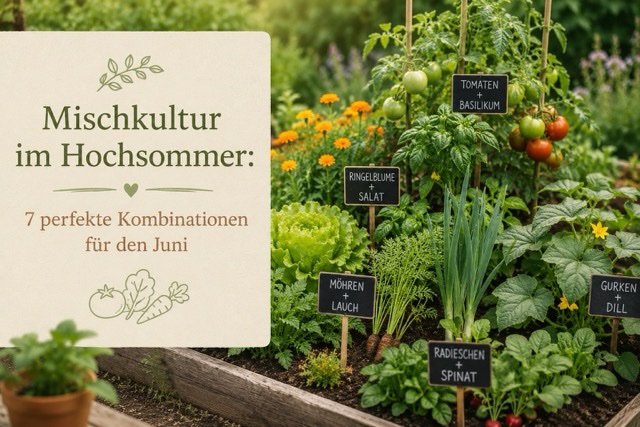
Companion planting is more than tomato and basil. The right combinations keep pests in check, improve the soil for next season, and use space three-dimensionally — tall growers above ground covers, deep roots next to shallow ones. Here are seven sets proven over decades.
1. The Three Sisters: corn, pole bean, squash
The classic of pre-Columbian permaculture. Corn grows tall and gives the bean its climbing structure; the bean fixes nitrogen at its roots and feeds both corn and squash; the squash covers the ground, retains moisture, and suppresses weeds. Still perfect for June sowing — let corn germinate first, then sow bean and squash when the corn is 15 cm tall.
Im Lexikon: Drei-Schwestern-Beet
2. Tomato, basil, and nasturtium
Probably the best-known combo — but usually only the first two. Nasturtium as the third partner is the game-changer: it pulls aphids like a magnet (decoy crop), and its foliage keeps the soil around the tomato cool and moist. Bonus: the flowers are edible and look spectacular on a salad.
Im Lexikon: Tomate
Im Lexikon: Basilikum
Im Lexikon: Kapuzinerkresse
3. Carrot, onion or leek, chives
The classic pest-swap combo: the smell of alliums repels the carrot fly, the smell of carrot repels the leek moth. Plant in long alternating rows for best effect. Add chives at the row ends — they keep aphids at bay too and bloom so prettily that beneficial insects come along.
Im Lexikon: Karotte
Im Lexikon: Schnittlauch
4. The Soup Vegetable bed: carrot, beetroot, leek, parsley
Four plants, one perfect bed, a winter’s supply of soup stock. Parsley and beetroot don’t get along everywhere, but next to carrot and leek it works. A proven template in the Rootivo bed planner — copy in two minutes and start growing.
Im Lexikon: Suppengemüse-Musterbeet
5. Mediterranean herbs: rosemary, thyme, lavender
All three love poor soil, lots of sun, and little water. Planted together they need almost no care — and their fragrances keep pest insects away, especially from cabbage and carrots nearby. Tip: put a lavender at the bed edge as a finisher, it attracts bees all summer.
Im Lexikon: Mediterrane Kräuter
6. Lettuce in the shade of tall plants
Lettuce bolts in the blazing July and August sun. Plant it in the partial shade of tomatoes, corn, or pole beans — you’ll harvest fresh, crisp lettuce for six weeks longer, instead of bitter stalks. Best summer varieties: pick-and-cut types like oakleaf or lollo, which bolt slower than head lettuces.
Im Lexikon: Kopfsalat
7. Cabbage with marigolds and celery
Marigolds keep the cabbage white butterfly away; celery masks the smell of the cabbage plants for the cabbage fly. Pre-planting marigolds reduces infestation by up to 60 percent in trials. Plus: the orange and yellow blooms make any cabbage bed instantly instagrammable.
Im Lexikon: Tagetes
A rule of thumb to take home: where different plant families stand together, pests don’t get the idea that an all-you-can-eat buffet of one variety is waiting. Monoculture is always riskier — even on 30 centimeters.