Blight Defense: What Decides Your Tomato Harvest in June
Muggy nights, warm rain, dense foliage — perfect blight weather. The next three weeks decide whether you harvest in August or watch bitter streaks spread.
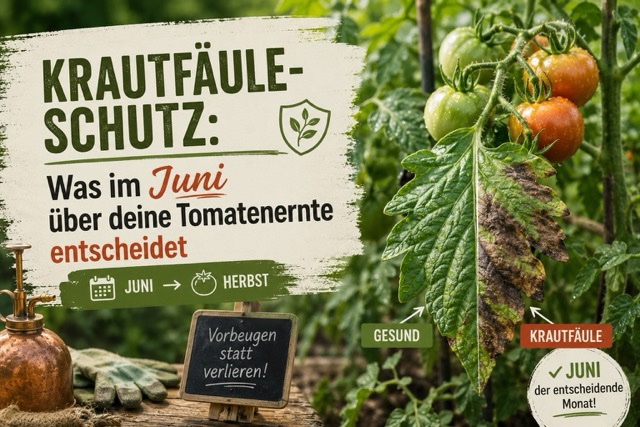
Late blight is by far the most common cause of total losses for home gardeners. The good news: getting June right covers 80 percent of the work. Here is what matters now.
Keep the foliage dry — no matter what
Blight spores need wet leaves for at least four hours to germinate. So water in the morning, never at night, and always at the roots, never over the plant. A shallow water trench around the tomato saves hours of watering and keeps the leaves dry. If you plant under a cover — tomato hood, glass roof, greenhouse — you gain an additional two to three weeks of season.
Strictly separate tomatoes and potatoes
Both belong to the same family (nightshades) and share diseases — blight jumps from potato to tomato and vice versa. Minimum distance: three meters, ideally a different bed. If you grow potatoes: lift them as soon as the foliage yellows, this drops the spore pressure significantly.
Im Lexikon: Tomate
Im Lexikon: Kartoffel
The right neighbors make the difference
Basil improves tomato flavor and aroma and uses essential oils to keep fungal spores away. Nasturtium as ground cover keeps the soil moist and cool — and when aphids arrive, they go for the nasturtium first, not the tomatoes. That is old permaculture wisdom, now also backed by research.
Im Lexikon: Basilikum
Im Lexikon: Kapuzinerkresse
Pinch out side shoots consistently
Every side shoot that stays makes the plant denser and the microclimate damper. Once a week, ideally on a sunny morning — the cuts dry up immediately. Three side shoots missed will cost you a full level of tomatoes two weeks later. Mandatory for staked, single-stem tomatoes; for bush varieties, decide based on density.
Remove the lower leaves
As soon as the first tomatoes set: cut off all leaves below the first fruit truss. This saves the plant energy and stops soil spores from reaching the upper leaves via splash. After each ripening truss, remove the next two leaf layers from below.
If it happens anyway
Get infected leaves and fruits out immediately, into the residual waste — not the compost! Wash your hands before touching other tomatoes. Horsetail decoction every 7 days as prophylaxis strengthens plant tissue — not a cure, but noticeably helpful. Remove infected plants radically once more than a third is affected; further hesitation won’t save them and endangers the neighbors.